FIPA report calls for a new way to understand whether B.C.’s freedom of information system is working.
FOR IMMEDIATE RELEASE
Victoria, B.C. 2026.06.18 — The B.C. Freedom of Information and Privacy Association (FIPA) is releasing Drawing Access Together, a report based on over three years of research into the province’s freedom of information (FOI) systems.
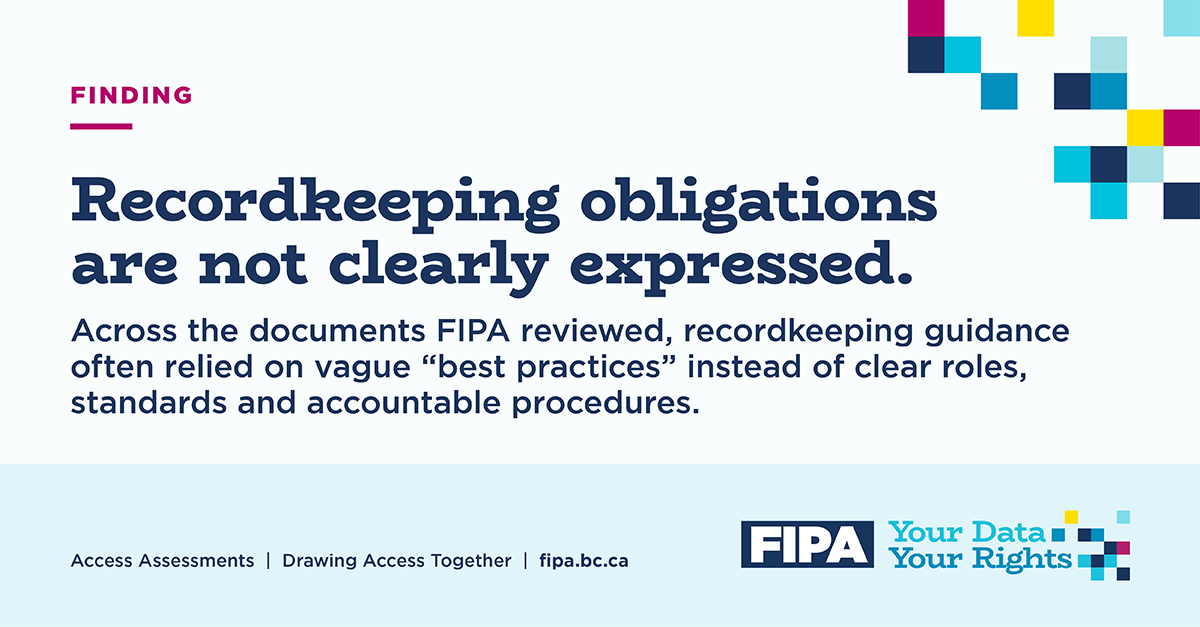
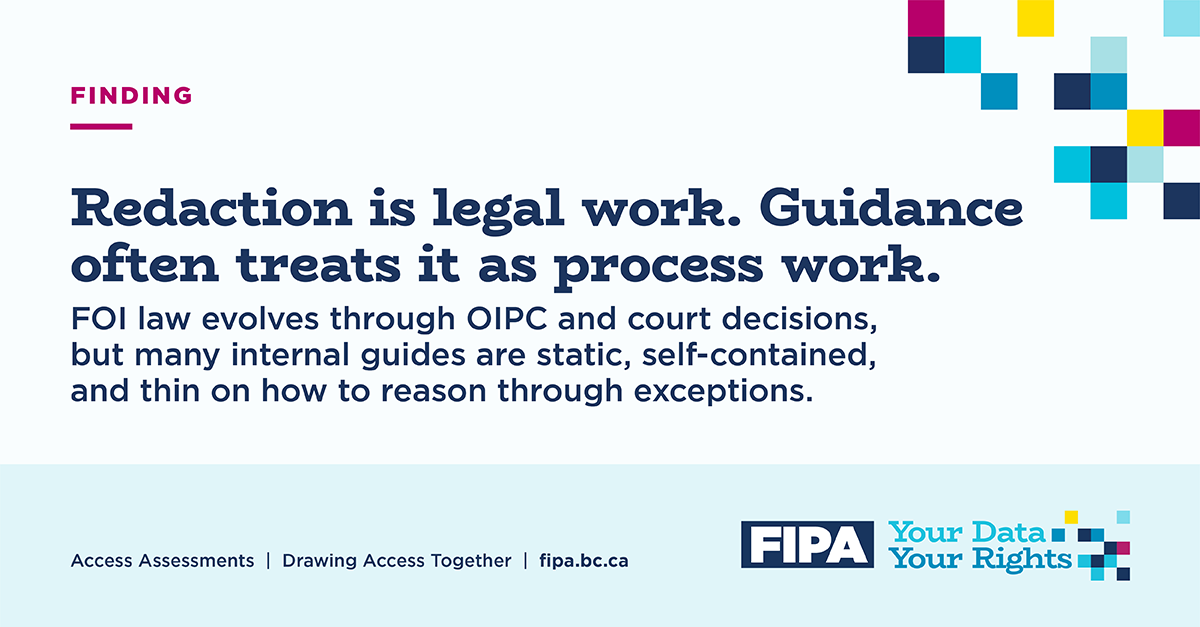
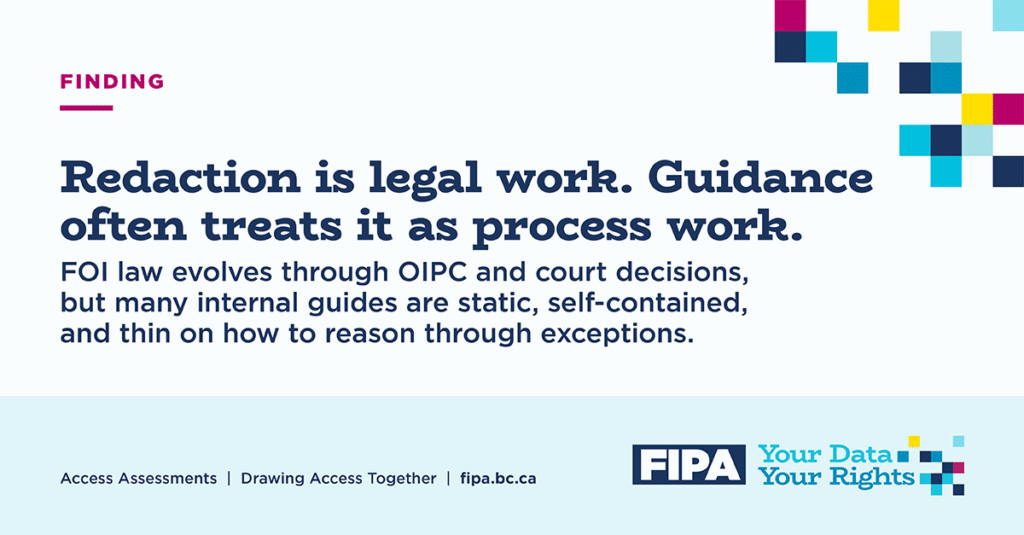
The report finds that most public bodies do not maintain documented standards showing how records are searched for, retrieved, or redacted when responding to freedom of information requests.
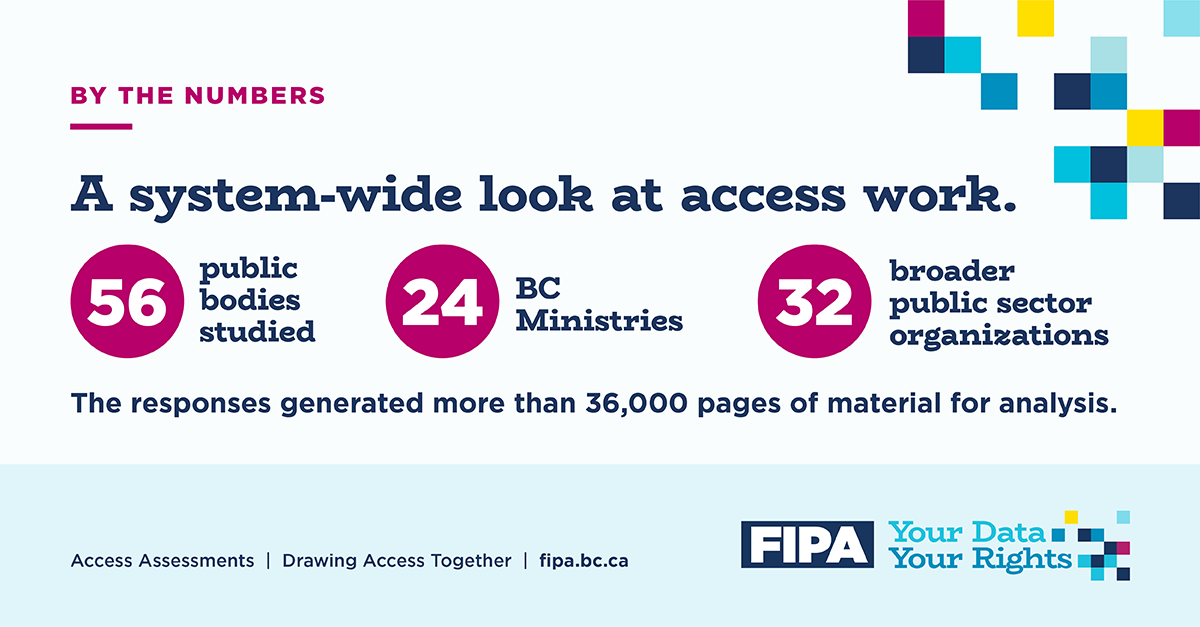
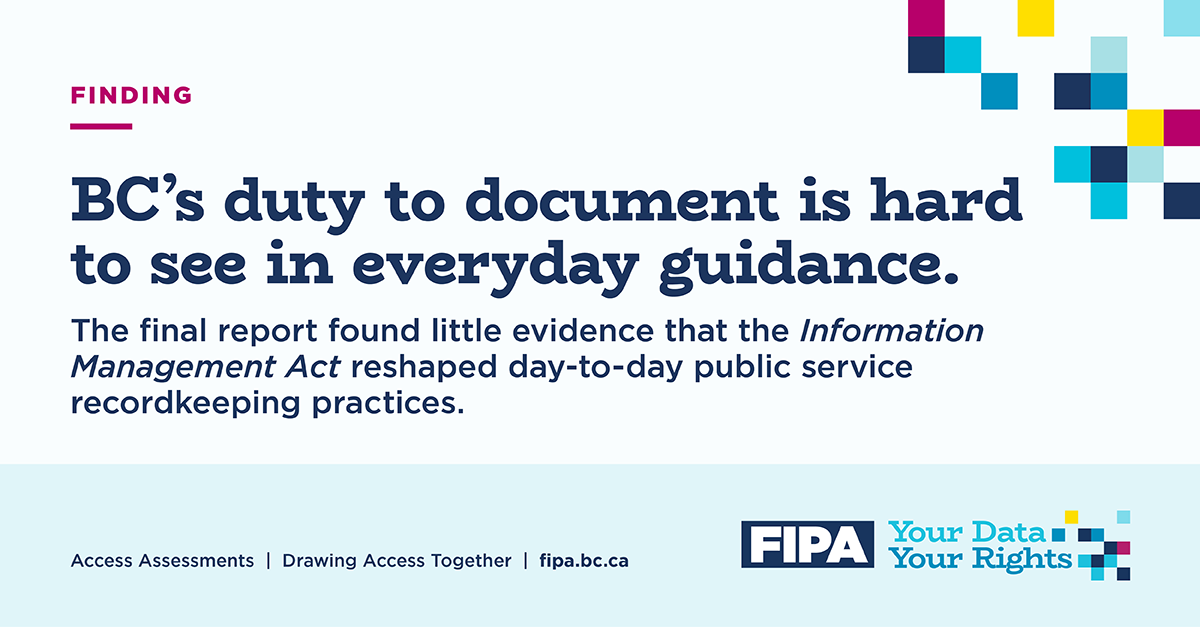
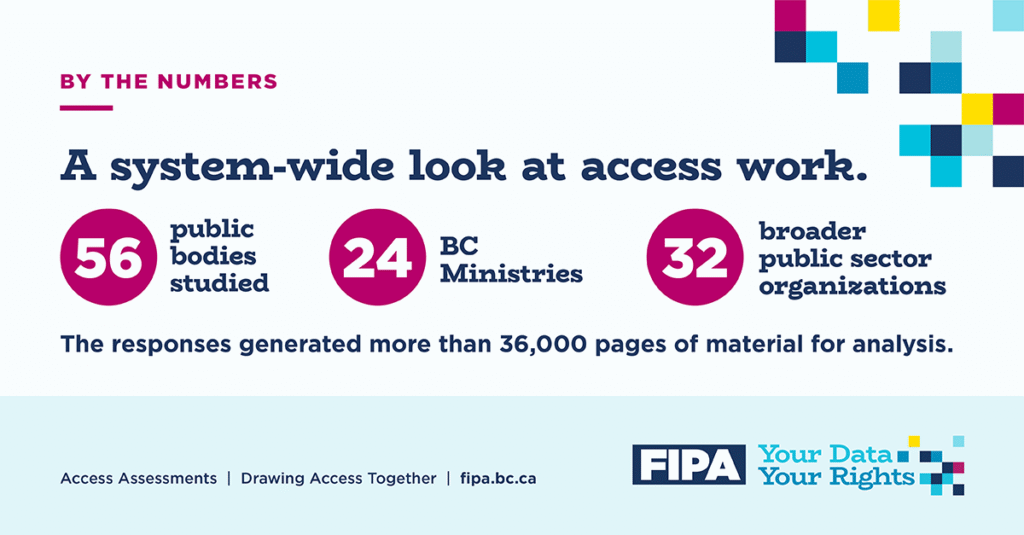
Drawing Access Together, authored by FIPA Researcher Spencer Izen, examined every public body subject to both the Freedom of Information and Protection of Privacy Act (FOIPPA) and the Information Management Act (IMA), B.C.’s public-sector recordkeeping statute. The 56 organizations reviewed include all ministries, as well as boards, agencies, commissions, tribunals, and Crown corporations.
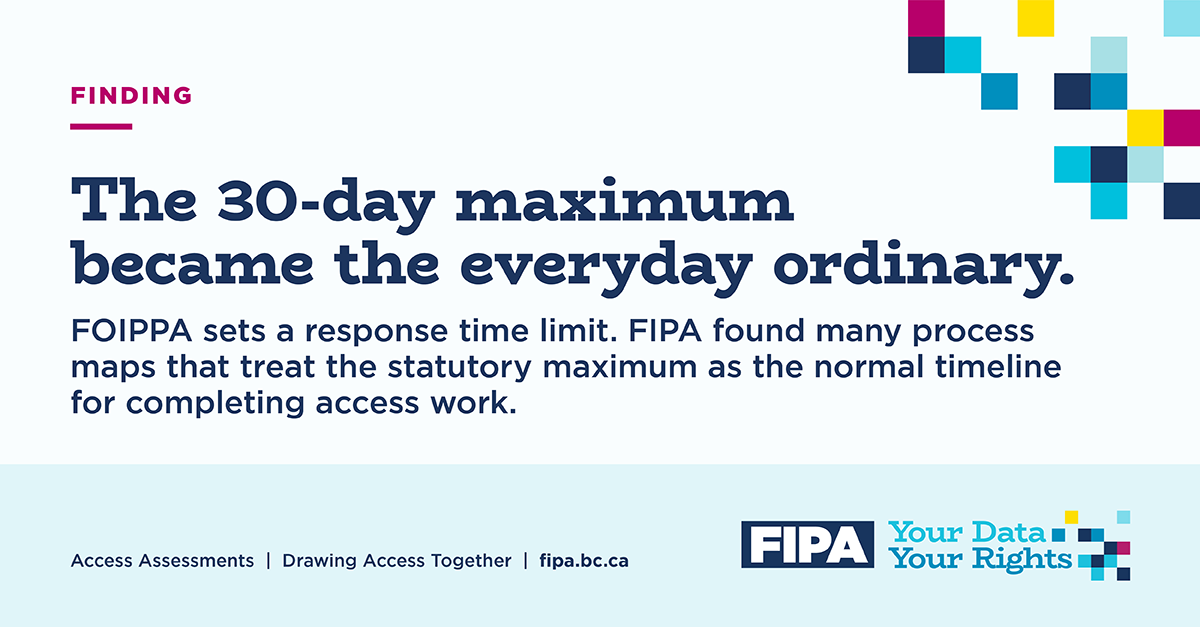
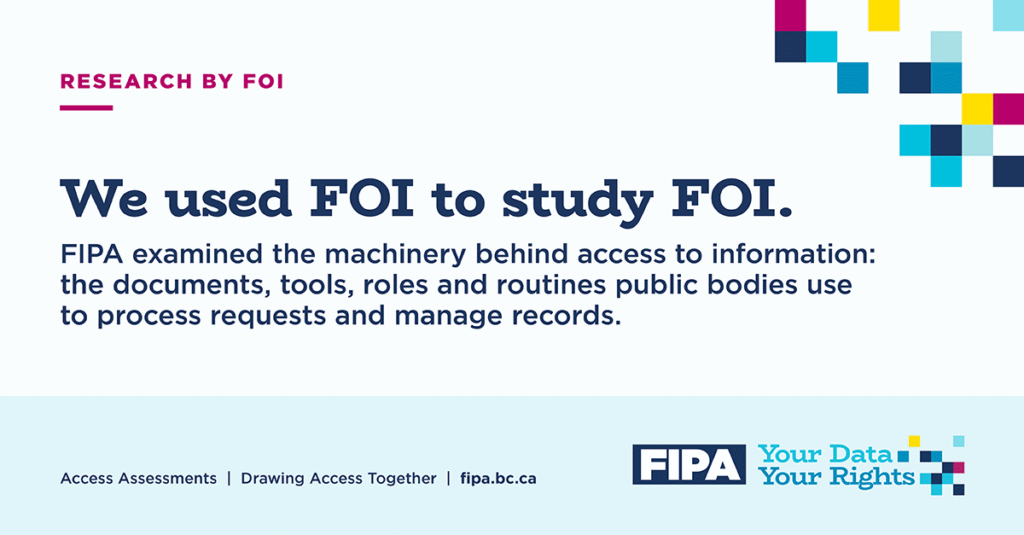
Using requests under FOIPPA, FIPA obtained thousands of pages of internal policies, procedures, and training materials between 2023 and 2025. Those records show that many public bodies document the administrative movement of an FOI file — who receives a file, when it moves, and how it is tracked — but provide less detail on the substantive decisions that determine whether access rights are fulfilled.
“Our data has shown that public bodies, to varying extents, do not rely on documented processes for retrieving or redacting records, which are the most critical moments in responding to an FOI request.” said Spencer Izen. “Instead, what is documented is mostly related to the administrative steps associated with processing a request along a conveyor belt, about who gets a file, when, and how.”
According to Izen, “What cannot be found cannot be disclosed, and what cannot be found also cannot support good public administration. There is no freedom of information without recordkeeping, but there is also no institutional memory, data-driven government, or learning from history without recordkeeping.”
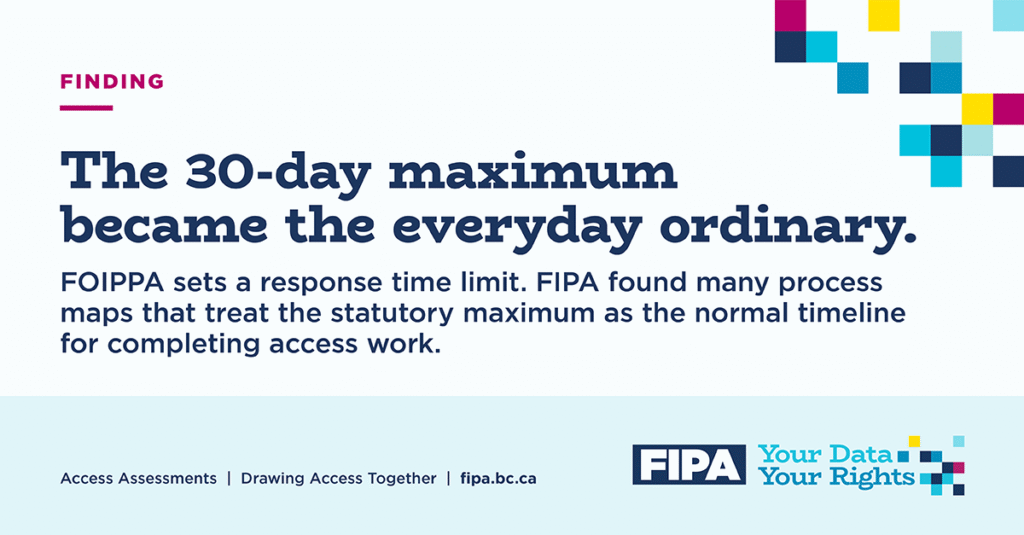
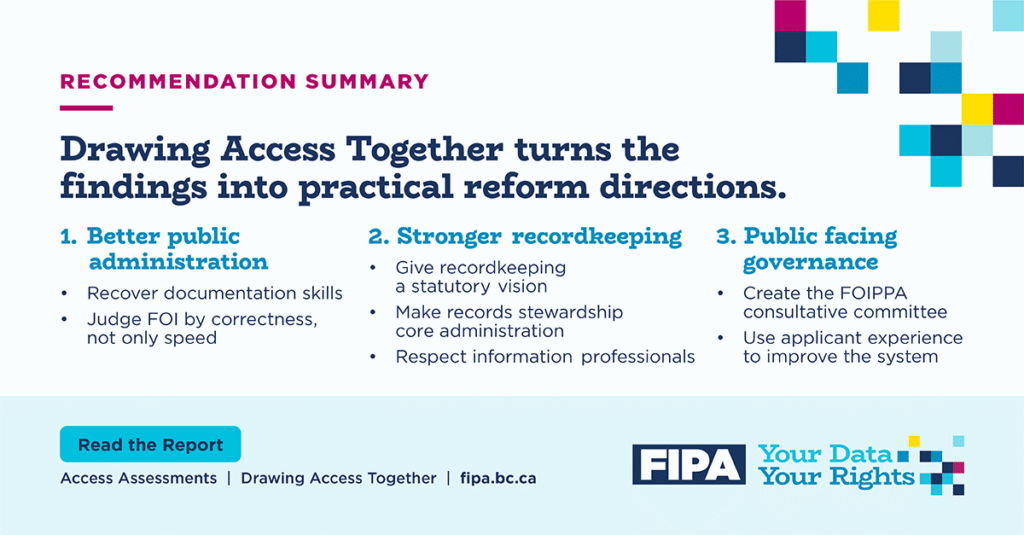
“British Columbia cannot fix access to information by measuring speed alone,” said FIPA President Mike Larsen. “We need to know whether the system is finding the right records, applying the law correctly, preserving public records, and serving the public interest. Transparency systems must themselves be transparent.”
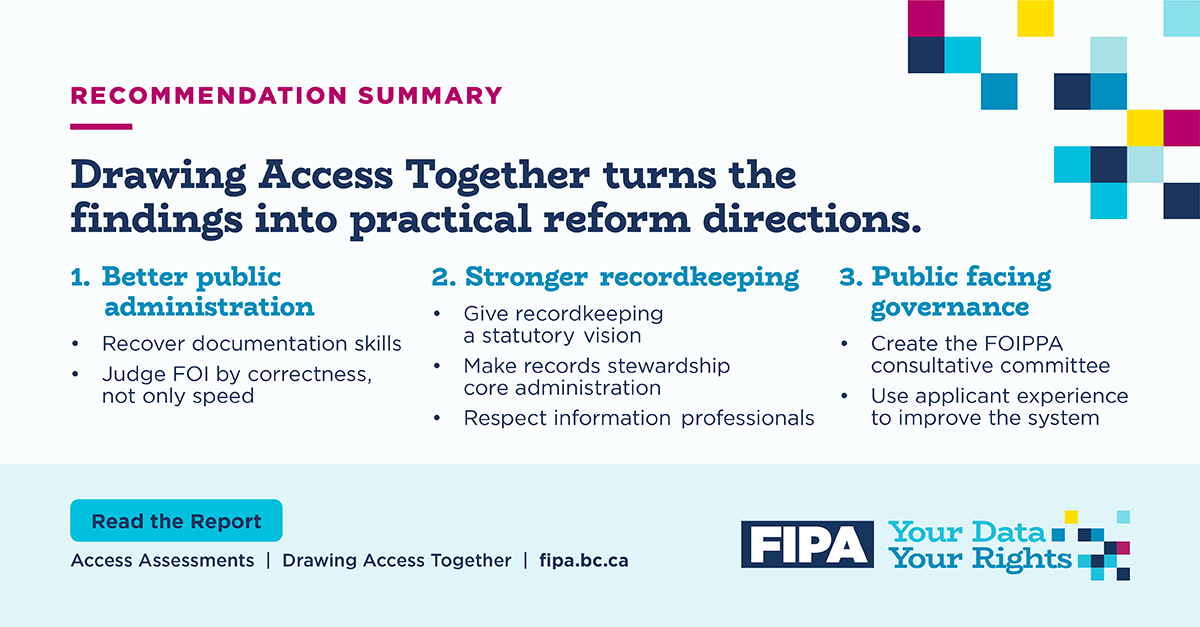
To address the problem, FIPA is calling for a new understanding of FOI based on the principle of correctness, meaning the right documents are rightly severed within the right time. This is one of our six recommendations, and is, in our view, the most pressing and overarching alongside our concerns about recordkeeping. It includes calling for renewed public investment in B.C.’s recordkeeping systems and for information professionals, including records managers and archivists, to play a central role in reform. As public bodies consider artificial intelligence and other emerging technologies’ integration into FOI work, the report argues that mature, well-governed recordkeeping is a necessary foundation for both transparency and accountable government.
“This report reflects years of careful work by Spencer Izen, and FIPA is grateful for the depth, rigour, and public-interest focus he brought to it,” said Jason Woywada, Executive Director of FIPA. “We also want to thank the many public bodies, records managers, FOI professionals, and public servants who provided information through the access process. While this research proves there is room for improvement, we want to acknowledge there were positive examples. Collectively, these responses gave us a good window into how British Columbia’s FOI system works.”