
BC Freedom of Information and Privacy Association
Your Data Your Rights
Ramara chambers was limited to standing room Monday morning. It may have been the first time the garage door was opened to make space for everyone, noted a resident in attendance.
A deputation by Jen Dundas, executive director of Camp Couchiching, drew the crowd. She requested the township’s support for a safety review of the Lake Country Airways aerodrome situated at The Cape Resort property on Rama Road. Although council heard from Dundas at the previous meeting, Ramara Mayor Basil Clarke said they wished to hear her deputation before acting on the request.
Aviation regulations are not municipal jurisdiction, said Clarke, but the matter is clearly significant to residents, and the township understands the importance of supporting them.
In response, after her presentation, Ramara council unanimously voted to suspend meeting rules to move the agenda item and vote on her deputation and a notice of motion right away.
Council then, also unanimously, voted to form a letter to Transport Canada, the Minister of Transport, Simcoe North MP Adam Chambers, and the Transportation Safety Board of Canada requesting a review of operational safety as soon as possible during the summer season for the Lake Country Airways water aerodrome.
The request will include adequacy of fight paths and the impacts on recreational water activities. The Chippewas of Rama First Nation, along with surrounding municipalities and NAV Canada will be copied on the letter.
Camp Couchiching is an 80-year old charity, with an annual property tax of $50,000 said Dundas, in her deputation. Only 300 metres across the bay on Lake Couchiching is where Lake Country Airways relocated its water aerodrome this spring.
The audience applauded and even cheered multiple times after her presentation and for each speaker on the subject during the open forum.
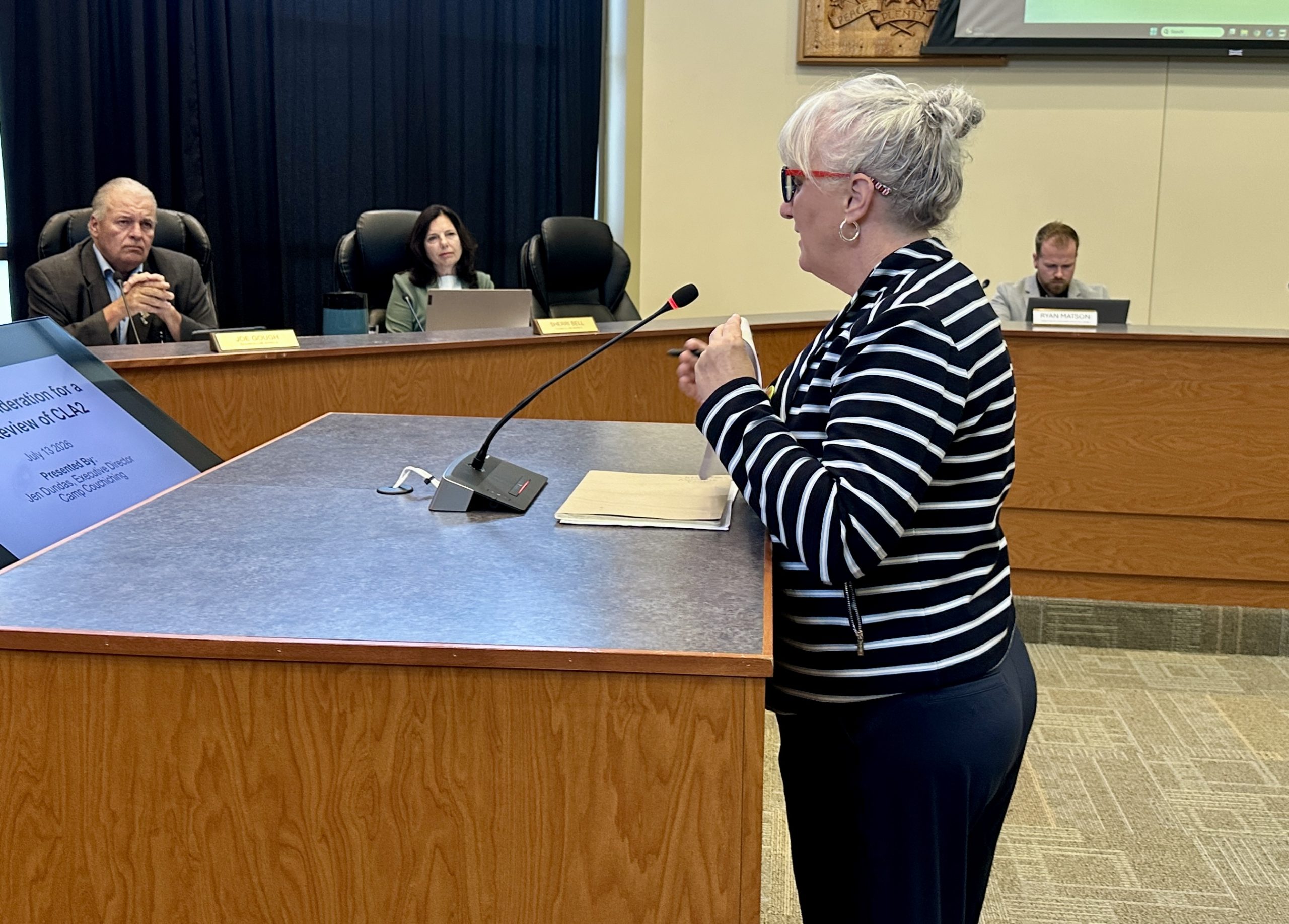
Jen Dundas presented her deputation seeking Ramara council support her request for a safety review of Lake Country Airways Aerodrome.
One speaker, Liane Spong, identified herself as someone with “roots in aviation,” through her family. She said she understands the operational challenges related to the aerodrome but stressed that safety is her primary concern, having witnessed first hand the risks and dangers from Lake Country Airways operating aircraft.
Dundas showed images of maps highlighting where Lake Country Airways uses the bay. It overlaps with a highly active zone for recreational use from campers and residents alike, showing swim routes and wind boat areas. She also observed that the float planes use an area for take off and landing which was not suggested when the aerodrome initially began operating on Lake Couchiching.
The camp was told in writing by a Lake Country Airways official that “all vessels must yield to the seaplanes due to their limited manoeuvrability.” Dundas explained how this misrepresents vessel hierarchy under the Canada Shipping Act, 2001.
“Lake Country Airways has told us they are in (vessel) RAM (restricted in her ability to manoeuvre) pecking order, so all other vessels must give way to the planes when taxiing for taking off & landing. However, they fall into a different location in the pecking order when on or over the water,” she said.
Swimmers are highest in the order, she noted, from her research into the Canadian Shipping Act, 2001.
“There have been instances where they are landing right next to Graham side road and right in front of the camp, to the point that some of our lifeguards on the swimming docks have felt the need to almost duck down,” she said.
Dundas cited several comments from staff and residents. One was from a sailing instructor, noting that “we can’t hear them, the planes are just there all of a sudden.”
Understanding that the lake is a public area, Dundas noted that the camp is accustomed to working around the general public. Working around a commercial operation of seaplanes operating out of the same bay is different.
“We should not have to give way to their planes all the time,” she said.
The mayor agreed, expressing “shock” that a commercial operation could establish a water aerodrome without a consultation process.
“We are not using the lake this year in the same way we have typically used the lake. I do feel a bit defeated by that,” said Dundas, “but I don’t see the general public knowing. We’ve been informed, but the general public are not informed, so they could be out in their kayaks…they aren’t always wearing the bright life jackets that we are, or have the boundary boats, or have backup support.”
Clarke mentioned that the aircraft are supposed to yield to those in the water and fly around until it is safe to land. To which a resident in the audience chimed in, “they circle around for three hours,” and commented on the noise disruptions this causes above their property.
During the open forum, several residents spoke about their fears related to the increased float plane activities. They stressed the dangers related to inexperienced pilots operating the planes, as Lake Country Airways is a training operation.
“Novice pilots practice landing in a highly populated lake, and a bay filled with boaters and children from Camp Chouchiching, the fact that Transport Canada allowed this to happen with oversight is unacceptable,” said Lisa Sherin during the open forum, supporting Dundas and stressing the importance of a strong letter from Ramara Township.
Several residents were reminded of a collision last year involving a float plane on Lake Scugog that resulted in the death of a 16-year-old boy.
“This summer we have planes piloted by inexperienced people landing in that bay using a landing route that is extremely alarming and could have disastrous consequences,” said Laura Clementi.
She pointed out the high winds that Lake Couchiching is known for. Allowing this commercial operation in a densely populated area is “an accident waiting to happen,” she said.
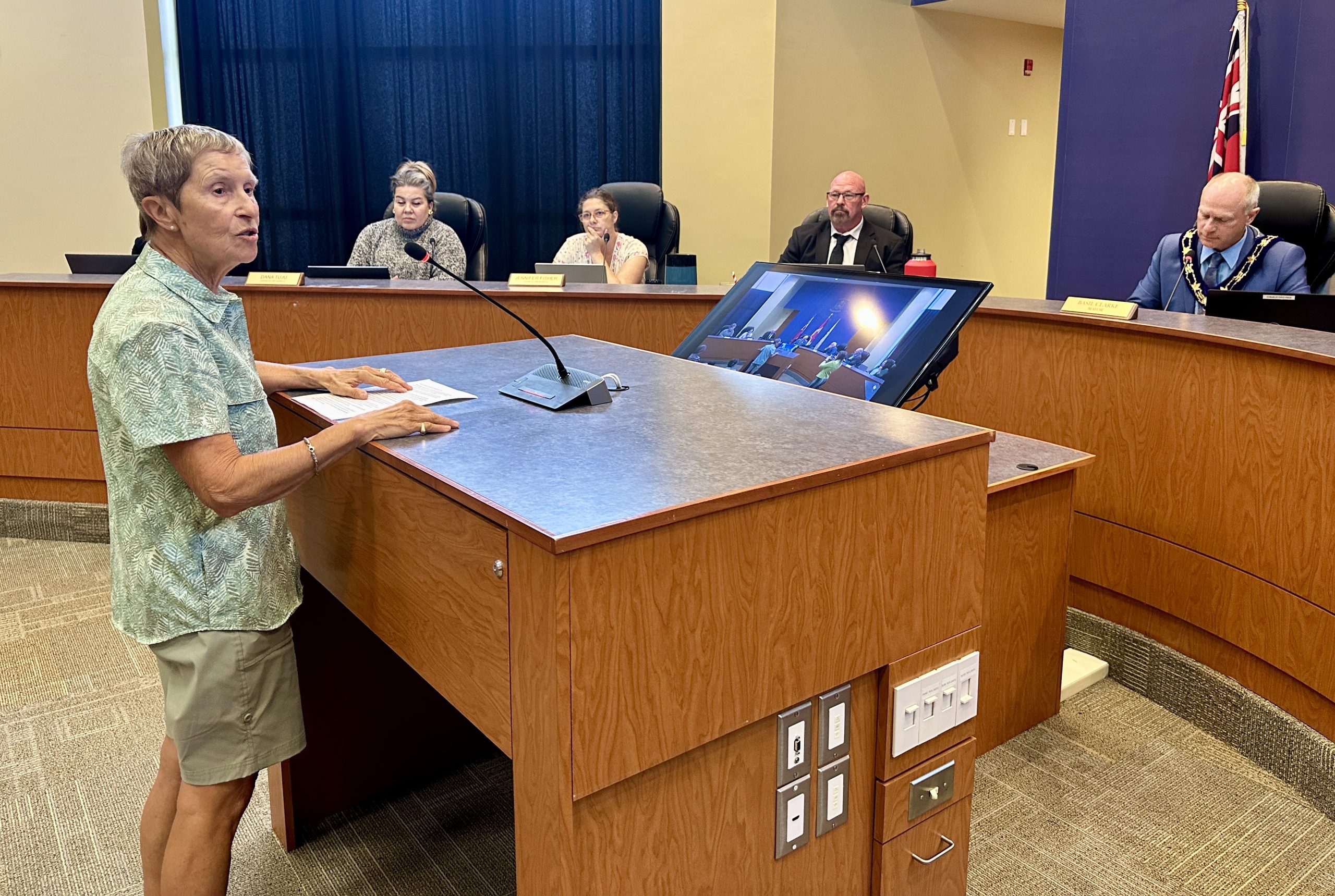
Laura Clementi stressed that the Lake Country Airways aerodrome on Lake Couchiching is a dangerous risk with how popular the use of the lake is with local residents.
What they fear, said Dundas, is another collision, noting the seaplane that ran over a boat in Vancouver in June 2024. Two people in the boat were seriously injured and the four people in the plane had minor injuries, she pointed out.
Dundas suggested three things Ramara Township can do to support residents and businesses affected by the aerodrome:
- Engage in conversations within your governmental channels to help support this review.
- Direct Township staff to complete Transport Canada’s form 80-0051E (1903-01), which is a preliminary assessment form for a vessel operation restriction regulations application.
- And to consider other opportunities that show support of local residents/businesses based on this impact.
Council agreed to discuss other opportunities to show support. One idea presented was to form a working group with other municipalities and organizations to unify their voice.
Resident Bruce Jackson, who said he and his wife have a clear view of the aerodrome from their dock, mentioned several instances where the proximity of float planes was alarming. He noticed one flew 500 feet above them in their boat.
“It was an accident waiting to happen,” he said, adding another instance when the plane was 100 feet above.
“On July 9, a white and red float plane flew past our 50-foot dock, no more than 150 feet, at about 30 feet above the water. This close proximity must have violated aeronautic rules and regulations,” he said.
Jackson was an RCMP officer for 30 years. He choked up while telling about working in the Northwest Territories when a float plane struck a sail boat and killed the occupant. Several reasons exist, he said, why a float plane base should not be located on the bay where a camp is located.
In an Access to Information and Privacy Act application to Transport Canada, Jackson said he asked for “the original application, if one exists, for the aerodrome” to move to Lake Couchiching. His only response so far was that Transport Canada needs more time to reply in order to consult with third parties.
“I don’t know who the third parties are, but I will let everyone know when that comes in,” he said.
As of noon on July 13, the change.org petition started by Dundas garnered 1,564 signatures.
You can support trusted and verified news content like this.
FIPA’s news monitor subscribers, donors and funders help make these available to everyone rather than behind a paywall. We appreciate every contribution because it makes a difference.
If you found this article interesting and useful, please consider contributing here.
